Basement Flood Cleanup in Marysville: What to Do First
· 6 min read · Water Damage
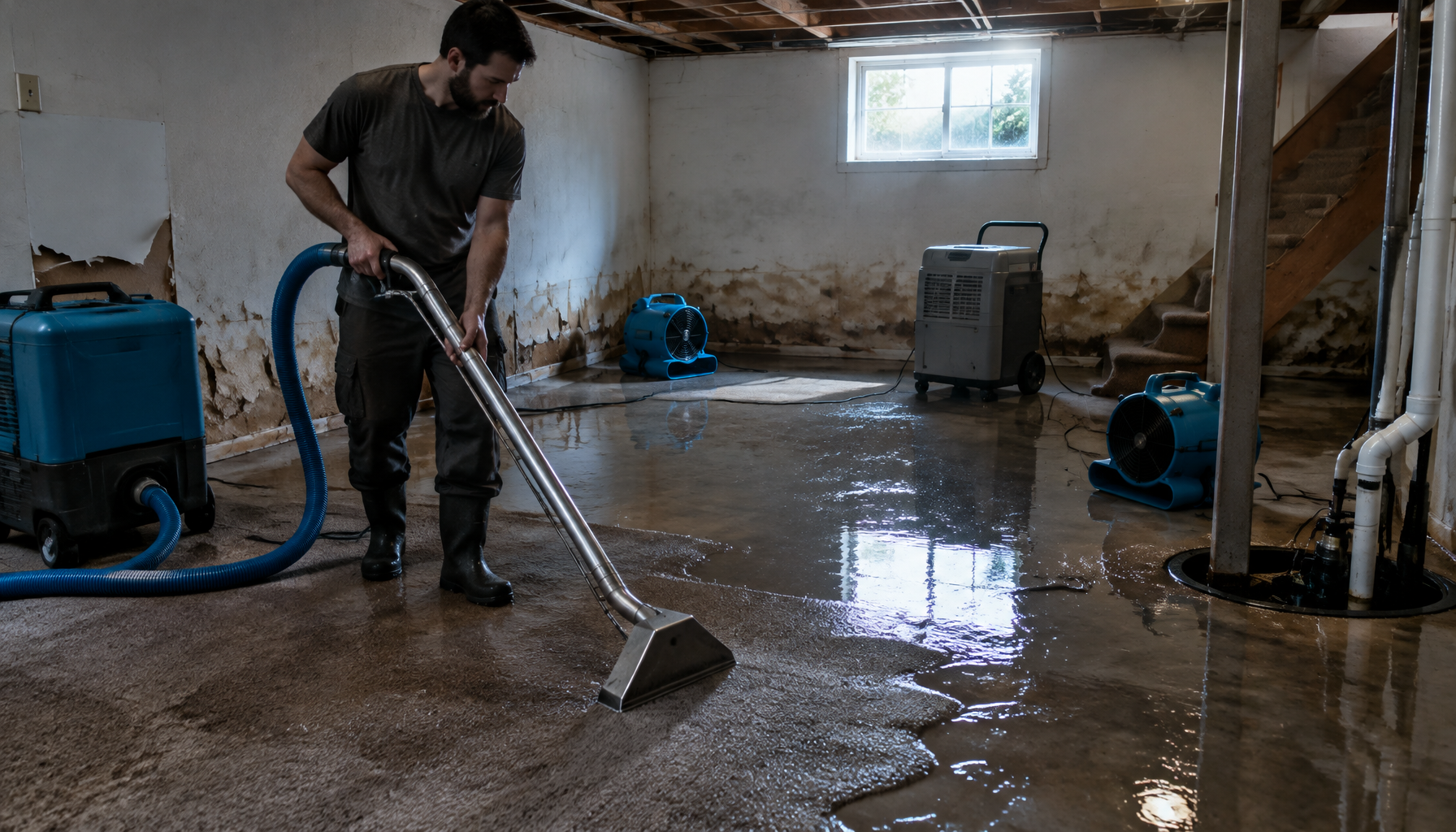
Walking downstairs to find water across your basement floor is a sinking feeling. Maybe it was a long autumn rain, a failed water heater, or a sump pump that quietly quit. Whatever the cause, basement flood cleanup in Marysville goes a lot smoother when you know what to do in the first few hours and what to leave alone.
This guide walks Marysville and Snohomish County homeowners through the safe first steps, the mistakes that make basement water damage worse, and what a professional cleanup and drying process usually looks like. Quality Restoration NW is based in Marysville and provides water extraction, structural drying, moisture detection, and flood damage restoration for homes across the area.
Why Basements Flood in Marysville and Snohomish County
Our wet season brings long stretches of rain, and below-grade spaces take the brunt of it. When the soil around your foundation stays soaked, water can work its way in through cracks, window wells, and the seam where the floor meets the wall.
Not every basement flood starts outside, though. A burst supply line, a leaking water heater, a washing machine hose that splits, or a sump pump that fails during a storm can put a lot of water on the floor in a hurry. Sometimes water comes up through a floor drain instead, and that is a very different situation we will cover below. If you want to get ahead of next season, our fall home maintenance checklist to prevent water damage covers gutters, grading, and appliance hoses.
Safety First: Before You Step Into the Water
If water is anywhere near outlets, extension cords, appliances, or the electrical panel, stay out of the basement and do not try to reach the breakers by wading in. Call a qualified electrician or your utility if you are not sure the area is safe.
If you can do it safely, stop the source. For a plumbing or appliance leak, that usually means shutting off the main water valve. Our guide on what to do in the first hour after a burst pipe explains how to find it. If a furnace, water heater, or other gas appliance has been sitting in water, leave it off and have it checked before you use it again.
If you do need to go in, wear rubber boots and gloves, and keep kids and pets upstairs until the water is gone.
Figure Out What Kind of Water You Are Dealing With
Clean water from a broken supply line is the lowest risk. Groundwater and storm runoff can carry soil and other contaminants. Water that backs up through a floor drain, toilet, or sewer line is another story: treat it as sewage and avoid touching it.
If you suspect sewage, skip the DIY approach entirely. Our sewage cleanup service uses containment, protective equipment, and sanitation steps that household cleaning cannot match. Our post on what to do after a sewage backup walks through those first steps, and our article on sewage backup health risks explains why this kind of water needs extra care.
What You Can Safely Do Right Now
Once the area is safe, take photos and video of the water, the walls, and anything damaged before you move or throw it out. Note when you found the water and what caused it. That record helps if you decide to file an insurance claim.
Move dry belongings, boxes, and electronics to a higher floor. If you can reach furniture without wading through deep water, set the legs on foil or wood blocks.
If the water is clean and shallow, you can start with mops, towels, or a wet vacuum made for water. Open interior doors to help air move, but keep basement windows closed if it is raining or damp outside.
Mistakes That Make Basement Water Damage Worse
Waiting is the big one. Drywall, insulation, carpet pad, and wood framing soak up water and hold onto it. The longer they stay wet, the more likely you are to see warping, lingering odors, and mold.
Another common mistake is assuming a dry-looking surface means a dry wall. Water wicks up drywall and travels under flooring and behind baseboards where you cannot see it. A few household fans running for a day or two rarely get those materials truly dry. If you are not sure whether moisture is hiding somewhere, our post on the signs of a hidden water leak lists what to watch for.
Finally, if ducts or HVAC equipment sat in water, do not run the system until it has been checked.
What Professional Water Extraction and Drying Looks Like
A professional cleanup usually starts with an inspection and moisture mapping. Our technicians use moisture meters and thermal imaging to find where the water traveled, including spots behind walls and under flooring.
Next comes water extraction to pull out standing water, followed by structural drying with industrial air movers and dehumidifiers. Moisture readings are taken as the job goes, so materials are confirmed dry instead of guessed at. Every basement is different, and our article on how long water damage restoration takes explains what affects the timeline.
Materials that cannot be saved, such as soaked carpet pad or saturated drywall, may need to come out. Where it makes sense, an antimicrobial treatment can help keep mold from taking hold. If mold is already growing, our mold remediation team can contain and remove it properly. Basements and crawlspaces share a lot of the same moisture problems, which we cover in our post on crawlspace moisture and mold.
A Word About Insurance
Coverage for basement water damage varies a lot by policy and by cause. A sudden burst pipe is often treated differently than groundwater seepage or surface flooding. Sewer backups and mold frequently have exclusions or limits, and many standard homeowners policies do not include flood coverage at all.
Contact your insurer early, ask what they need, and keep your photos and notes handy. For more background, read our guides on whether homeowners insurance covers water damage in Washington and what to expect when the insurance adjuster visits.
Basement Flood Cleanup in Marysville: When to Call a Pro
Call for help if the water is more than a small puddle, if it reached drywall or carpet, if it came from a floor drain or sewer line, or if you notice a musty smell days later.
Quality Restoration NW is locally based in Marysville and serves homeowners in Smokey Point, Tulalip, Arlington, Lake Stevens, Everett, Snohomish, Stanwood, Mukilteo, Granite Falls, and across Snohomish County.
Basement Flood Cleanup FAQ
Can I dry out a flooded basement myself? For a small amount of clean water caught right away, sometimes. Once water soaks into drywall, insulation, carpet, or framing, household fans usually cannot dry it all the way, and hidden moisture can lead to odors and mold.
Is basement floodwater dangerous? It can be. Groundwater and storm runoff can carry contaminants, and water that comes up from a floor drain or sewer line should be treated as sewage.
Will my insurance pay for basement flood cleanup? It depends on your policy and what caused the water. Coverage varies, and flood, groundwater, sewer backup, and mold often have exclusions or limits, so check with your insurer before assuming either way.
Get Help With Your Flooded Basement
If your basement took on water, do not wait and hope it dries out on its own.
Call 206-787-0291 for 24/7 water damage help from Quality Restoration NW. Insurance coverage varies by the cause of loss and the terms of your policy.