Water Heater Leak Cleanup in Marysville: What to Do First
· 6 min read · Water Damage
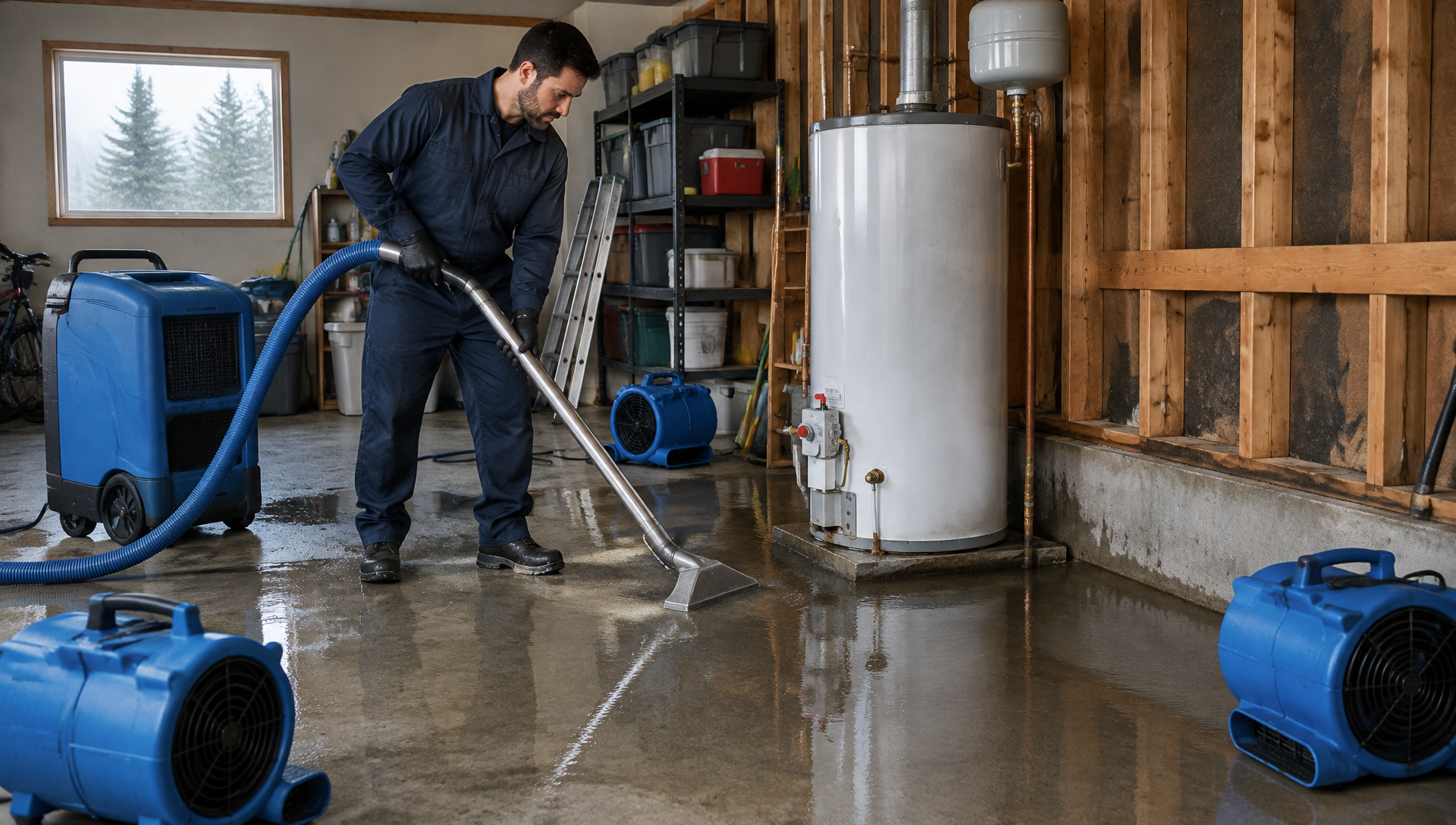
A leaking water heater rarely announces itself. You might notice a puddle in the garage, a damp spot on the laundry room carpet, or a closet floor that feels soft underfoot. Sometimes the tank simply gives out and you walk into an inch of water. Water heater leak cleanup in Marysville goes a lot better when you know how to shut things down safely, what to leave alone, and when the water has gone further than it looks.
This guide is for homeowners in Marysville and across Snohomish County, whether your water heater sits in a garage, a hall closet, a basement, or tucked under the stairs. Quality Restoration NW is based in Marysville and provides water extraction, structural drying, moisture detection, and water damage restoration for homes throughout the area.
Why Water Heaters Leak
Most water heater leaks come from a handful of places. Supply and outlet connections at the top of the tank can loosen or corrode. The drain valve near the bottom can drip. The temperature and pressure relief valve can release water if it is doing its job or if it is failing. And as tanks age, the tank itself can rust through, which usually means a steady leak that will not stop on its own.
Cold weather can add stress too. When a cold snap rolls through Snohomish County, the incoming water is colder and the heater works harder. Our post on how to prevent frozen pipes in the Pacific Northwest covers other ways winter can put your plumbing under strain.
Safety First: Shut It Down the Right Way
If water is pooling near outlets, extension cords, or the electrical panel, do not walk through it to reach anything. Stay out and call a qualified electrician or your utility if you are not sure the area is safe.
If you can reach the heater safely, turn off the cold water supply valve, which is usually on the pipe going into the top of the tank. For an electric heater, switch off its breaker at the panel. For a gas heater, turn the control to off or pilot following the instructions on the unit. If you ever smell gas, leave the house and call your gas utility from outside.
If the cold supply valve will not stop the flow, shut off the main water valve to the house. Our guide on what to do in the first hour after a burst pipe explains how to find it. Remember that the water inside the tank can be very hot, so keep hands and feet away from the drain valve and relief valve outlet.
What You Can Do While You Wait for Help
Once the water is off and the area is safe, take photos and video of the heater, the floor, the walls, and anything that got wet. Note when you found the leak. That record can help if you decide to contact your insurance company.
Move boxes, rugs, and stored items out of the wet area. If the leak is small and the water is clean, towels and a mop can handle the surface water. Open interior doors to help air move. Leave repairs to the heater itself to a licensed plumber, who can tell you whether a part can be fixed or the unit needs to be replaced.
Where the Water Goes That You Cannot See
Water heaters often sit right up against walls, inside closets, or next to finished rooms. That means a leak can wick into the bottom of drywall, run under baseboards, soak into carpet pad, and spread beneath vinyl, laminate, or hardwood. In a garage, it can creep under the wall into the next room. A slow leak can go on for a while before anyone notices.
A floor that looks dry is not always a dry floor. If you are not sure whether moisture has spread, our post on 7 signs you have a hidden water leak lists the warning signs to watch for. Our article on water damage categories and classes explains why even clean water needs attention quickly, since it can become more contaminated the longer it sits.
How Professional Water Heater Leak Cleanup Works
A professional cleanup usually starts with an inspection and moisture mapping. Our technicians use moisture meters and thermal imaging to find where the water traveled, including inside wall cavities and under flooring.
Next comes water extraction to remove standing water, followed by structural drying with industrial air movers and dehumidifiers. Moisture readings are taken as the job goes, so materials are confirmed dry instead of guessed at. Soaked carpet pad, saturated drywall, or swollen baseboards may need to come out, and an antimicrobial treatment can help keep mold from taking hold. Our water damage restoration team handles this drying and repair work, and our post on how long water damage restoration takes explains what affects the timeline.
If the heater sits in a lower level, our guide to basement flood cleanup in Marysville covers more of what to expect with below-grade water.
Watch for Mold After a Water Heater Leak
Damp materials in a closed closet or behind a wall are a perfect setup for mold, especially in our damp Northwest climate. Our article on how fast mold grows after water damage explains why drying quickly matters so much. If you notice a musty smell or discoloration near the old leak, our mold remediation team can inspect for hidden moisture and growth.
And if a nearby floor drain or toilet starts backing up while you are dealing with the leak, treat that water as contaminated. Our sewage cleanup service handles backups that need containment and sanitation.
A Note on Insurance
Coverage for water heater leaks varies by policy and by cause. A sudden failure is often handled differently than a slow leak that went on for weeks, and the heater itself may be treated differently than the damage it caused. Mold related to the leak may be excluded or limited.
Call your insurer early, ask what they need, and keep your photos and notes handy. Our guides on whether homeowners insurance covers water damage in Washington and what to expect when the insurance adjuster visits can help you prepare.
Water Heater Leak Cleanup FAQ
Should I drain my water heater if it is leaking? Not necessarily. Shutting off the water supply and the power or gas usually stops things from getting worse. The water in the tank can be very hot, so leave draining and repairs to a plumber unless you know exactly what you are doing.
Can I dry a small water heater leak myself? If the water was caught right away and only touched a hard floor, often yes. Once it soaks into drywall, carpet, or the subfloor, household fans usually cannot dry it all the way, and hidden moisture can lead to odors and mold.
Do I need a plumber or a restoration company? Often both. A plumber repairs or replaces the heater, and a restoration team extracts the water, dries the structure, and repairs the damage.
Get Help With a Leaking Water Heater in Marysville
If your water heater leaked onto floors or into walls, the sooner drying starts, the less chance the damage has to spread. Quality Restoration NW is locally based in Marysville and serves Smokey Point, Tulalip, Arlington, Lake Stevens, Everett, Snohomish, Stanwood, Mukilteo, Granite Falls, and communities across Snohomish County.
Call 206-787-0291 for 24/7 water damage help from Quality Restoration NW. Insurance coverage varies by the cause of loss and the terms of your policy.