Ceiling Water Damage in Marysville: Signs, First Steps, and Drying
· 6 min read · Water Damage
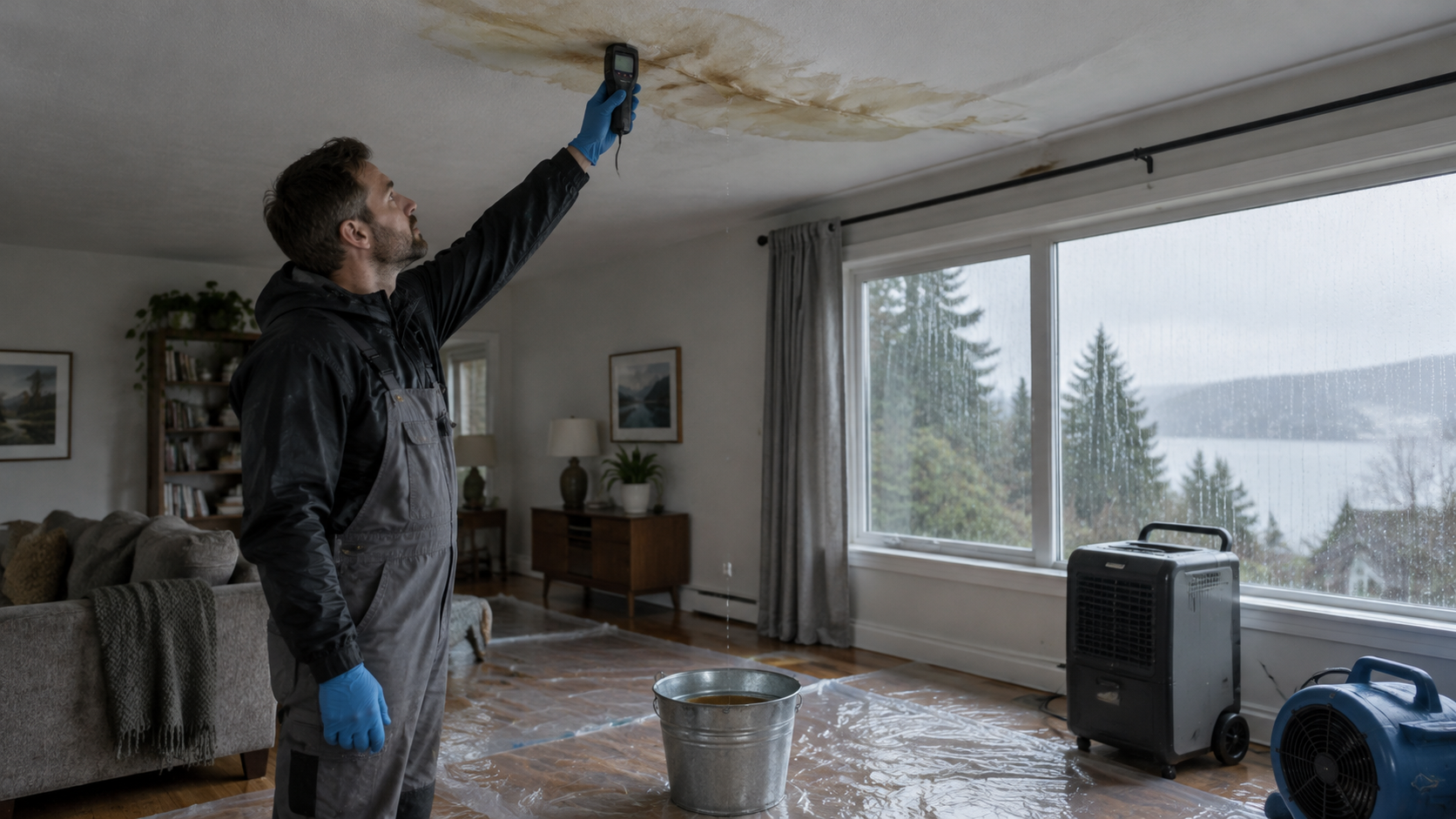
A brown ring on the ceiling has a way of showing up right when the rain settles in for the season. Maybe it started as a faint spot above the bathroom door, or maybe you noticed a drip landing on the living room carpet during a windy night. Ceiling water damage in Marysville is common this time of year, and what you do in the first few hours makes a real difference in how much of the ceiling, insulation, and framing can be saved.
This guide is for homeowners in Marysville and across Snohomish County who are staring up at a stain, a bubble, or a sag and wondering what comes next. Quality Restoration NW is based in Marysville and provides water extraction, structural drying, moisture detection, and water damage restoration for homes throughout the area.
Where Ceiling Leaks Usually Come From
Water above a ceiling almost always came from somewhere higher up, and the stain is often not directly below the source. Water can travel along rafters, joists, and pipes before it soaks through.
In our area, the usual suspects are roof leaks during long stretches of fall and winter rain, flashing around chimneys, vents, and skylights, ice or debris backing up in gutters, and condensation in a poorly ventilated attic. Inside the house, a leaking upstairs toilet, tub, shower pan, or supply line can show up as a stain on the ceiling below. Our post on 7 signs you have a hidden water leak covers other clues that water is moving where you cannot see it.
Warning Signs of Ceiling Water Damage
Some signs are obvious, like an active drip. Others are easy to miss. Watch for yellow or brown stains with darker rings, paint that bubbles or peels, drywall seams or tape that start to show, a ceiling that looks lower or softer in one spot, and a musty smell in an upstairs room or closet.
Stains that grow after each storm usually point to a roof or flashing issue. Stains that get worse after someone showers or runs a bath upstairs point to plumbing.
Safety First: What to Do Right Away
If the ceiling is sagging or bulging, keep everyone out of the room. A ceiling holding water can come down without much warning, and wet drywall is heavy. Do not poke it from directly underneath.
If water is dripping near a light fixture, ceiling fan, or smoke detector, turn off the breaker for that area and stay clear of the fixture. If you are not sure which breaker controls it or the panel is near water, call a qualified electrician.
If the leak is coming from plumbing, shut off the water supply to that fixture or the main valve for the house. Our guide on what to do in the first hour after a burst pipe explains how to find the main shut-off.
What You Can Safely Do While You Wait
Move furniture, rugs, and electronics out from under the wet area and set a bucket or tote under any drip. Lay down towels or plastic to protect the floor.
Take photos and video of the ceiling, the floor below, and anything that got wet before you move or throw things away. Note when you first saw the stain and whether it was raining or someone was using water upstairs. That record can help if you decide to contact your insurance company.
Why Ceilings Are Hard to Dry Without Help
Once water reaches a ceiling, it usually soaks the insulation above it first. Wet insulation holds water against the drywall and framing, and it can stay damp long after the stain looks dry from below. That trapped moisture is a big reason ceiling leaks lead to odors and mold weeks later.
A box fan pointed at the ceiling will dry the paint, but it will not reach the back of the drywall or the insulation above it. Our article on how fast mold grows after water damage explains why drying the hidden layers quickly matters so much, and our post on what a musty smell may reveal about hidden mold damage covers what to watch for after the fact.
How Professional Ceiling Water Damage Restoration Works
A professional visit usually starts with an inspection and moisture mapping. Our technicians use moisture meters and thermal imaging to find how far the water spread across the ceiling, into nearby walls, and down to the floor below.
From there, the plan depends on what the readings show. Wet insulation and saturated or sagging drywall often need to come out so the framing can dry. Structural drying with industrial air movers and dehumidifiers follows, and moisture readings are taken as the job goes so materials are confirmed dry instead of guessed at. Where it makes sense, an antimicrobial treatment can help keep mold from taking hold.
If the leak also reached the floor below or ran down into a lower level, our water damage restoration team handles that extraction and drying too. Our posts on water damage categories and classes and how long water damage restoration takes explain what shapes the scope and the timeline.
When a Ceiling Leak Is More Than Clean Water
Not every ceiling leak is clean water. If the stain sits below an upstairs toilet that overflowed or a drain line that backed up, treat the water as contaminated. Our guide to toilet overflow cleanup explains when that kind of leak needs a professional, and our sewage cleanup team handles containment and sanitation for those situations.
If you already see fuzzy growth or dark spotting on the ceiling, avoid scrubbing or disturbing it. Our mold remediation team can contain the area and address both the growth and the moisture behind it.
A Note on Insurance
Coverage for ceiling water damage varies by policy and by cause. A sudden plumbing failure is often handled differently than a roof that has leaked slowly over time, and repairs to the roof or the leaking fixture itself may be treated differently than the water damage it caused. Mold related to the leak may be excluded or limited.
Call your insurer early, ask what they need, and keep your photos and notes handy. Our guides on whether homeowners insurance covers water damage in Washington and what to expect when the insurance adjuster visits can help you prepare.
Ceiling Water Damage FAQ
Should I poke a hole in a bulging ceiling to let the water out? It is safer to keep people out of the room and call for help. A water-filled ceiling can give way suddenly, and wet drywall is heavy. If water is near light fixtures or wiring, turn off that breaker and stay clear.
Can I just paint over a ceiling water stain? Not until the leak is fixed and the materials behind the stain are confirmed dry. Painting over damp drywall or wet insulation can trap moisture and lead to odors, staining that returns, and mold.
Do I need a roofer or plumber as well as a restoration company? Often, yes. A roofer or plumber fixes the source, and a restoration team finds the hidden moisture, dries the structure, and repairs the water damage.
Get Help With Ceiling Water Damage in Marysville
If water has stained, softened, or started dripping through a ceiling in your home, the sooner the hidden layers are dried, the less chance the damage has to spread. Quality Restoration NW is locally based in Marysville and serves Smokey Point, Tulalip, Arlington, Lake Stevens, Everett, Snohomish, Stanwood, Mukilteo, Granite Falls, and communities across Snohomish County.
Call 206-787-0291 for 24/7 water damage help from Quality Restoration NW. Insurance coverage varies by the cause of loss and the terms of your policy.